Midweek Mention... Merry Christmas, Mr Lawrence
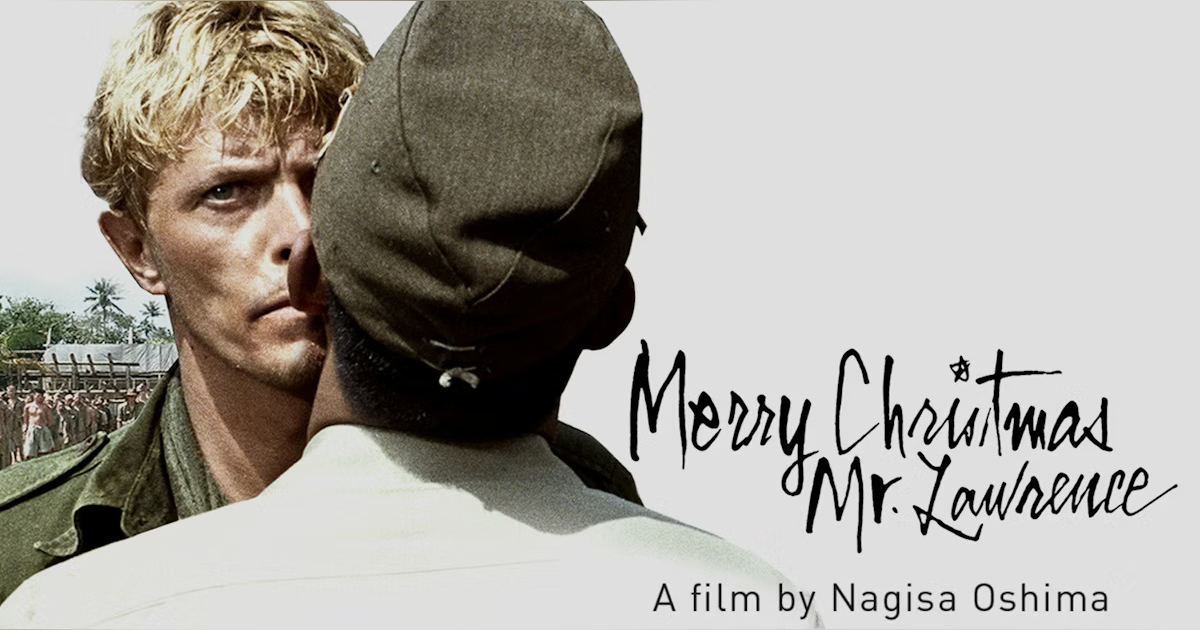
Homoeroticism, honour codes, and the least festive “Merry Christmas” ever recorded. This week’s pick looks like a seasonal warm hug by title alone, but it’s actually a POW-camp psychodrama where Christmas is basically just another opportunity for humiliation, beatings, and cultural misunderstanding. The core triangle Lawrence (Tom Conti): the cultural bridge. He respects Japan’s traditions more than the other prisoners do, but still can’t square the camp’s brutality with the language of “hono...


Homoeroticism, honour codes, and the least festive “Merry Christmas” ever recorded.
This week’s pick looks like a seasonal warm hug by title alone, but it’s actually a POW-camp psychodrama where Christmas is basically just another opportunity for humiliation, beatings, and cultural misunderstanding.
The core triangle
- Lawrence (Tom Conti): the cultural bridge. He respects Japan’s traditions more than the other prisoners do, but still can’t square the camp’s brutality with the language of “honour.”
- Celliers (David Bowie): quiet defiance, charisma, scars, and a refusal to surrender mentally even when physically broken.
- Yonoi (Ryūichi Sakamoto): the commander whose obsession with honour is also clearly entangled with fascination/desire — especially towards Celliers — and whose self-loathing (the “missed coup / lost honour” backstory) bleeds into how he runs the camp.
What the film is really doing
This isn’t a “war movie” in the guns-and-heroics sense. It’s a study of shame and power:
- The Japanese guards are trapped by their own code: surrender is incomprehensible, confession is weakness, punishment is “order.”
- The prisoners are trapped by their code: resistance is identity, humiliation is poison, compromise looks like collaboration.
- And between them is Lawrence, trying to keep men alive with language — while knowing language isn’t enough.
The flashback that explains everything
Celliers’ confession about failing to protect his younger brother (and the brutal boarding-school initiation) is where the film stops being “about the camp” and becomes “about the kind of violence men normalise.” That shame mirrors Yonoi’s shame. Different cultures, same wound.
The moments you won’t forget
- The mock execution: Bowie refusing the blindfold because it’s “for them.”
- The Christmas scene: Hara drunk on sake, Lawrence spared, and the phrase that becomes the film’s ghost.
- The public kiss: Celliers’ desperate, weaponised tenderness to stop an execution — the emotional bomb that breaks Yonoi.
- The ending, years later: Lawrence visiting Hara, now the condemned man, and the final line delivered with a tragic calm:
“Merry Christmas, Mr. Lawrence.”
Verdict
Not festive. Not cosy. Not easy. But brilliantly acted, quietly devastating, and still unusually forward-thinking in how it frames desire, masculinity, and shame without turning it into cheap scandal.
If you want tinsel: watch Elf.
If you want a Christmas film that leaves a bruise: this is the one.
We love to hear from our listeners! By which I mean we tolerate it. If it hasn't been completely destroyed yet you can usually find us on twitter @dads_film, on Facebook Bad Dads Film Review, on email at baddadsjsy@gmail.com or on our website baddadsfilm.com.
Until next time, we remain...
Bad Dads
Merry Christmas Mr Lawrence
Dan: Merry Christmas,
Reegs: Mr. Lawrence. Yeah. Yeah.
Dan: This isn't. Really is Christmas is it May 1st appear by the title.
Reegs: Yeah, I did say that in the group text, didn't I? That this,
Dan: thinking about it as I said that maybe it is,
Reegs: well maybe we'll get to the Christmas Eves
or of it or otherwise
Dan: present he got
Reegs: You got, yeah. Yes. His life. But yeah, the title does suggest a lot of Christmas cheer and not a lot of savage beatings and homoeroticism, which is what we actually get in this movie.
Dan: David Bow, he's in this movie. And it was his I know, fourth serious acting role.
I think he did. The Man Who Fell From Earth before
Reegs: Mm-hmm.
Dan: and this collaboration with the Japanese filmmaker
Reegs: NAA Oshima he did most famously, I think [00:01:00] in the realm of the Senses
Dan: which I've not seen.
Reegs: yeah, it's a sexy movie in it as
Dan: Right. Okay. And he's sort of, acting alongside another pop star in Japan.
Yeah. At the time, because David Bowie was obviously huge as a musician at this point and felt listening to his interviews afterwards that. He would give, he would raise this for more of an art house movie, his being in it to give it an audience with more people. And it certainly did that because critics ended up taking note and a lot more people ended up taking note, certainly in the Western part of the world because of David Bowie
Reegs: Mm-hmm. Yeah.
Dan: And it starts off with. The, the guard that we see
Reegs: the upfront though, that there is quite a lot to unpack here in this movie and it's gonna be quite hard to do it justice, I think.
Dan: Yeah, well that's [00:02:00] true of all the films. We most of them anyway.
Reegs: Yeah. Some more than others are home alone.
I didn't probably have the same level of scrutiny like we did last Christmas as, as this sort
of
Dan: Possibly not, but it's, it's, yeah, it's not quite at home alone levels, but it starts off with. A Japanese guard coming into the prisoner of war camp and waking up Mr. Lawrence because he's needed and you
Reegs: Tom Conte.
Dan: of the Yeah. Is to is
Reegs: Conty and we saw him in the Dualists only a couple of weeks ago
Dan: and Shirley Valentine was the first thing that I saw him in.
Reegs: He was an Oppenheimer as well, wasn't he? Obviously played Einstein in Oppenheimer.
Dan: and a really terrific actor. I really like him
Reegs: He's great in
Dan: in this. He was, he was fantastic and he.
I mean, you see the brutality of the Guard.
There was the guard's name again, harder.
Reegs: It's Toshi. Catano?
Dan: Yeah. He's, he's in it quite, you know, he's, he's one of the main guys in it, and [00:03:00] he, he's a complex character because he's, he's both brutal and kind. He's, he's obviously very a man of full honor in his own culture and his own mindset. But
To the British and American and Australian and New Zealand and Dutch, they're all encamped there.
He is quite a cool man. And you see sight of that. And your first feeling is, yeah, he's bloody cool because he marches out along and there's a, a Korean. I think it's a Korean guy who's been nursing the wounds of a Dutch guy in the prison and they ended up,
Reegs: He's a Korean, he's a cuddling.
Yeah. He's a Korean guard with a Japanese name, Komoto. I think being used to symbolize like, 'cause this is the Japanese, but they're in the Java. They're
Dan: in Java
Reegs: in Indonesia, and they've been fighting a battle in [00:04:00] that region and against the Koreans as well in 19. 36, I think there was some stuff, and all my history's not great, but, so there's also all that sort of going on and it's, he's got a Japanese name to symbolize, like Japan's dominance over career at that time.
But like you say, there's this weird scene of a sort of they've been caught having sex basically. And there's, it's a dispute whether or not, essentially in the logic of the film, whether it was consensual or rape de young, the Dutch guy who.
He, he sort of says, oh, he came to tend my wounds. He was very kind, but then implies that he was overpowered and took something that
Dan: Yeah.
Or also kind of implied that he was very kind and actually that's not the way that it, it was that he, they both looked for a level of comfort in a horrible, horrible world where they're both living in a, in a nightmare. Yeah. Scenario. And he wants him Hari, the, the
Reegs: well, Japanese culture is [00:05:00] very homophobic, especially the Bushido code, which they're running this prison camp via the code or Hara
Dan: Yeah.
And he wants him to perform Harry ca
Reegs: Puku
Dan: puku
Reegs: where you, it's like a ritual kind of disempowering. You do it yourself, but then you also have your head lopped off with
Dan: get a little bit of support after you've stabbed yourself in the gut and sliced your yourself open. Your pain is short-lived because somebody will chop your head off.
Reegs: I think this scene looks kind of a little timid now 'cause this movie was made in 1983, but it's clear what's actually going on. He has to stab himself multiple times in the stomach to do it. And Catano swings the saber a few times and it like, it looks pretty budget, but he's obviously in the logic of the film, he's cutting him open.
Like it's got a savage, horrible way for
Dan: Lo Lawrence is there as the only officer who understands the Japanese language and has lived in
Reegs: Yeah. He's a cultural bridge
Dan: and Exactly. He's. [00:06:00] But he still can't understand what's going on here. He can't get his head around this side of things,
Reegs: But he does sort of have a genuine respect for Japanese culture aside from this thing. And there's a big debate about war, and he describes Englishmen as being essentially attritional in war. We'll wait you out. It doesn't matter. You know that I'm the prisoner in this time, and you are the,
Dan: he, they, they have kind of these honest conversations a little bit later, but at this point he calls over the, the camp commander, if you like.
Because he, he realizes that HARU is going and doing his own thing here. It's a bit of a kangaroo court. He's, he's running and. He's got, while he is got these other officers of the, the camp the Japanese guards and things around all running and, and nodding to him and everything, saluting him.
He has to report into the camp commander who comes over and tries to get an explanation of what's going on. He kind [00:07:00] of pauses this for a little while. And this guy is just clearly in pain 'cause he is already started, he's already been hacked out a few times and eventually they do chop his head off and the Dutch guy swallows his own tongue and, and dies as well in the sheer fear and disgust of it all.
Yeah.
Reegs: So pretty brutal. But we don't have long to really take all this in before we are whipped off to the, to meet David Bowie as Captain Jack sells. In fact he major.
Dan: he may be a captain or a major, but yeah, he's been caught staging gorilla warfare and in fact he surrendered
Reegs: Yeah,
Dan: again, something the Japanese can't really understand.
Reegs: He's up, he's up in a sort of military tribunal, which is obviously a kangaroo court. The, the guy who's translating for him is just like relishing. The fact that it, the death sentence is being discussed and almost certainly to be handed down. But Bowie has a kind of quiet stoicism and [00:08:00] defiance, which Yono find.
Dan: Yanu, who is the camp commander who's been asked to be part of this court and since, and send in judgment. And he, as you say, he instantly has some kind of connection with him.
Reegs: It's because the way that
Dan: he answers, he
Reegs: right. And he shows off his battle scars, his, his wound, his torture scars and yeah.
And all sorts. And he talks of. Being a soldier and being on his Majesty's army. He looks sensational. Bowie here, like, and the camera's like really close up so you can see his eyes and how unusual that looks.
Dan: Yeah. He's he is got shock blonde hair. He's,
as
you say showing off his battle scars. He's, he's told them that he's been beaten and they find that. Unbelievable because they work with more honor than that, but in fact, they don't, and they come to a judgment that he should be then going into a prisoner of war [00:09:00] camp.
Reegs: well, it's nui who pushes for that, right? Yeah. The other two basically want death.
But Nui says no, has him incarcerated with Lawrence is
Dan: Not before though. They do string him up in a barn and pretend to do a firing squad on him. Yeah. And
Reegs: he doesn't know. He thinks he's going to be shot. He says to them after they pull the trigger, he is broken hanging there. And he says, that's a good one.
That one.
Dan: Yeah.
Reegs: He's got this sort of very sick sense of humor.
Dan: Well, yeah, that's right. He, he won't give an inch. He, he won't let them have their, his mind, so.
Reegs: So
Dan: E, even the blindfold, he doesn't want it.
He said, it's not for you, it's for the people that are shooting you. And he goes, I don't want it. I don't want it. So he's making them look in his eyes as they about to shoot him. But you see your eye behind him just taking all this in the way this man is, has stood up and to death and taken death and with such dignity.
So he can't help but [00:10:00] think. Wow, this is some soldier. This man has, has a lot of honor and it soon comes into the camp, the, the camp. The officers, the prisoner of war officers have a, a chief kind of officer Yeah. Who reports into YI over all things and he is being asked for the battle. Armaments and, and any,
Reegs: he, anybody who knows ammunitions and Armin and explosives within the prisoner
Dan: he won't give him anything but name, rank, and number.
Yeah. So he wants him replaced with David Bowie, who he thinks is gonna give, or Jack Sealers who he thinks is gonna give him some more information.
Reegs: But he also
Dan: the infirmary,
Reegs: he also talks very openly with Lawrence. And you think he's going to, you know. Or wants to put Lawrence in that position as well. 'cause I mean, he confides to him.
Like he has this big shame about the February 26th, my birthday up, it was the Cota in in Tokyo. Tokyo. And he [00:11:00] missed it. He was on some peripheral mission and away
Dan: it had already been sent away, hadn't he? And lots of his friends and colleagues had died in it,
Reegs: and he'd lost honor, basically has this massive sense of shame that and self-loathing effectively, that again,
Dan: like, you know, we would struggle to understand why, because he had already been sent away by someone else and he couldn't possibly have known that. But that is
Reegs: Well, and I think as well though, he was a career, like a career soldier and now has ended up basically humiliated running a prison camp. Yeah. As well. So it's, you know, it wasn't what he wanted to do. It's basically lack of honor and all that stuff in Japanese society.
Dan: Well, Jack's
Reegs: is this when we, we, he, Jack comes in and they.
There's a puku, isn't there another one? And p he puts them all on a fast because they,
Dan: yeah, that's right there, there's a, a scene where another officer is, has died and to honor him, the, the Japanese yoru [00:12:00] has said, right, we're not gonna eat for, for two days. Yeah. Nobody's gonna eat. And they saying, what? You can't bloody. You know, do that. The British officers and, and the, the Dutch and everything. It is disgraceful. And he says, Lawrence is saying, look, if you do it, they'll do it.
Understanding the culture. This is about, you know, spirits and honor and everything. Lawrence goes for none of that and starts finding some food sellers.
Reegs: Yeah. Cs. Yeah. He goes off, he goes and finds these beautiful flowers that he eats like defiantly in front of them.
Dan: And he, yeah. And he hands them out to everyone and they start singing and he's got some kind of.
Cake that they eat as well. And so he's just defined as, as much as he possibly can be in front of them, and he won't give an inch. He gets kind of marched out in front of everybody again.
Reegs: In the next part of the film, this is much more subtle really than all of the Wikipedia entries and things make out, but it's nui starts to inquire after
Dan: C
Reegs: s [00:13:00] and because of the already introduced themes about homosexuality, you come to understand that nuy is sexually attracted to s
Dan: there, there's something going on there. And also a little bit later on when CS has been in a few other scraps and everything he's, he's imprisoned in solitary confinement and it's almost towards the end, but he does kind of say, oh, I haven't had much in the way of,
Reegs: Yeah. Romantic.
Dan: Romantic interludes or anything.
Reegs: And he's, you know, he, he obviously is admires him 'cause that's where he saves him.
But then it, you know, it becomes clear there's a romantic fixation between them. Yeah. Which is very subtle in the movie, but it's definitely the, well, it becomes less subtle as the movie goes. By the time he's chopping off a lock of his hair to take home with him. It's pretty clear what's going on.
Dan: Yeah. And he, he also, in front of everyone. He gives him sort of a kiss on either cheek Bowie to
Reegs: Oh, that's right. Towards the end. Yeah.
Dan: to to stop him executing somebody else. And he just can't seem to, to take that.
But [00:14:00] yeah, there's, there's a lot, as you say, to unpack. There's a lot going on within the scenes.
Reegs: Probably the main things to talk about as it goes on is there's like, there is an attempted escape, isn't there when Lawrence is beaten up. There, there's the radio, there's a radio discovered which leads to both men being kind of punished
Dan: and Lawrence being blamed for it and they know that it's not him, but he's.
Reegs: they don't care.
Dan: one? No. They say to him, so you are gonna say I'm gonna be executed? Just because we have to acknowledge power. Right or wrong. Yeah. He's going, yeah, exactly.
And he, he kind of laughs through to himself. And Har has to be the one on Christmas Day who's gonna do the
Reegs: execution. Yeah.
Dan: but he gets wasted. And they both go in.
Sellers and Mr. Lawrence, they go in to face their judgment and he's drunk on Sy.
Reegs: Yeah. Yeah.
Dan: And he goes,
Reegs: Merry Christmas.
Dan: Christmas. I'm Santa Claus.
Off you go. Yeah. And then the next day he [00:15:00] takes the the punishment and says, yeah, look, I got drunk on Sy. And I, I let him both go actually. Yeah. Like they're still here, but I've, I let 'em. You know, both free of their judgment and he doesn't go against that again. He
Reegs: yeah. Honor. No,
Dan: he says, oh, you know, that's it.
Right. You're confined to, your
Reegs: Wow. This is the bit where he does bring them all out. It does look like he's gonna have them all mowed down. All killed the entire camp, including all everyone in the infirmary. We have. Just quickly to skip back, a crucial scene where David, where Lawrence has confessed about a woman.
I didn't understand his story actually, I've got to say, but he confesses some secret about a woman that he met in. Singapore, somewhere like that. But that more importantly, SEIUs tells his backstory, which is of his little brother that had a sort of protruding bone and a on his back and a si yes, it could.
Fantastic singing talent. They see them when they're younger singing in [00:16:00] church and they're mocking the boys behind them that can't sing. But then
Dan: was a weird flashback, this wasn't it,
Reegs: It is now when it morphs into Bowie playing an 18-year-old, but as 36, but dressed in full school uniform. Yeah, I bet Sidey was jacking one out right now.
Dan: That's his kind of stuff
Reegs: he's
got a boater on, I think. Yeah. And I think we realize it's symbolic more than anything because he's, brother basically is coming up to the boarding school where, where Bowie is, and there's some ritual initiation gonna happen, and
Dan: I thought they were gonna kill the little boy.
Reegs: oh yeah, he could protect him, but he doesn't.
Dan: And it, it really, it's initiation. They're all just saying, sing, sing, sing, sing.
Reegs: Yeah, but some of those guys, the kid looks about 11 and the guy, the people who are abusing him, look like they're in their mid thirties.
Dan: Yeah. I mean it was, it was hugely intimidating, but they didn't actually get physical with him other than stripping his top half
Reegs: And then they throw him in a sewer, don't
Dan: And they put him in like a Yeah. Pond sewer kind of thing.
Reegs: And it's lit really weirdly and [00:17:00] staged, like a play basically with Bowie on the right hand
Dan: it's certainly, yeah. Certainly horrible for, for a little boy to, to have gone through that. And he never sung again.
He never sung a note. And that had always played on s's mind more than anything else yet. Lawrence's story was about how he'd, like when he came back from. I think a war posting, the girl was still in the same hotel, in exactly the same place.
Reegs: But what did that mean though?
I didn't
Dan: away for his, no, I, I dunno, really like, that she'd waited for him.
That, you know, that
Reegs: Yeah, I couldn't get what the story was. I just, anyway, I missed it. I don't think it was that important because it was more like confessional for both of them. And Celia's confession, he's got this big shame about not protecting, you know, that, that his story and Yoo's story sort of mirror each other in a way.
And then it sets up the big finale where he's gonna, it looks like Yoo is gonna have essentially the whole camp executed. He brings out. Says, not everyone's [00:18:00] here. Bring me out. The people from the infirmary and they bring these guys out, they look
Dan: absolutely
One of them dies on the way there or as soon as he gets there.
And it looks like, as you say, they've got a gun,
Reegs: they've got a gun pointed at everyone. They're gonna execute Hinkley or whatever his name is. The the
Dan: the commander of the British officers and the, and the team, the one that reports into YI they're gonna execute him for not following orders.
Reegs: And so this is when, as you mentioned before, then suddenly to stop it all Bowie strides across the, the sort of park and kisses nui on both cheeks and nui is like enraged. He sort of enraged and then overcome with emotion. All the swelling, emotion of his feelings and everything that's invested in it and just faints.
Yeah. Quite extraordinary end to a film. Really,
Dan: he falls back and a new camp commander comes into town who, one who isn't gonna be so sentimental and he ends up.
[00:19:00] Dig in a big pit and
Reegs: sand neck tie they called
Dan: Yeah, that's right. So it is just he's standing up in this pit.
They fill it up with sand
and s is made to just rot in there until everybody leaves.
Reegs: It's right in the middle of where the barracks or whatever they are, where the people, the prisoners are, and they sing at hymn as he dies, like in the sun. It's fucking
Dan: brutal. Yeah.
Reegs: And then, then at night Nui goes to visit him. He's been moved on and shamed again, but he, he can't resist a final thing.
He sends the guards off and cuts a lock of right.
Dan: I thought he was gonna slit his throat to put him out his misery
Reegs: Who knew what was gonna happen, but he takes a lock of his hair.
Dan: he with a a razor just takes, as you say, a lock of his hair, which we learn later. It has gone into a shrine in Japan.
Reegs: And the last we see of Bowie is he dies in the sun with an amazing shot of a butterfly just landing on his face as he was sort of dead.
I dunno how they did
Dan: or [00:20:00] a butterfly is just there. Yeah.
And then you think, right, well that's it. You know, he's out of it. It, it's gone.
Reegs: No, but now you're gonna get one of the, in a great, a scene of a film of great scenes. You're gonna get a really good scene right at the end.
Dan: it's Mr. Lawrence going to visit the guard Harrow, who the tables have been turned.
Reegs: four years later. Yeah.
Dan: Yeah. And he's going to be executed the next day. He's, you get the sense that Lawrence has tried to appeal on his behalf and said, you know this, but. Enough of the other prisoners have been subject to, hi, this guy's cruelty, to to seal his fate. He, and we saw right from the first scene, he needlessly hit one of the the prisoners of war just for saying, why are you taking him, what you're gonna do?
And, and so he definitely had that quality about him. It was just that Lawrence understood. Him and through the language you say this cultural bridge. So then it built this [00:21:00] friendship.
Reegs: But then strangely now both men have got another friendship, even though essentially their roles have been reversed. Right down to the detail of that, har has now taken up an interest in English culture and is trying to understand it a little bit more. Yeah. It speaks English a little bit now as he never did in the camp and that sort of thing.
And then. It's like, it's, I really like the ambiguity of their relationship. Like are they enemies? Are they friends? It doesn't matter. They've been through this crazy, horrible Yeah. Experience by the end of this
Dan: and
Yeah. That's right. And he's Lawrence is looking every bit.
A healthy officer, then he's all dressed up and Harry's in his, his clothes that are gonna probably see him executed the next day.
And he's got some rosemary beads some kind of Buddhist, rosemary beads around him as well.
Reegs: But right down to the very end though, he still doesn't understand what he's done wrong. Haru, he says My crimes are no different from any others, even though they've seen them breach the Geneva Convention and explicitly [00:22:00] mention that numerous times within the film.
Dan: That's right.
Reegs: But he still doesn't know. But, and then Lawrence says to him, you are the victim of men's decisions or something. Something like that.
this
Dan: this is it. I think, as I said, they. Enough of those people in the camp that had got out had particularly singled him out as a, as a cool man, partly due to what his culture was.
Yeah. And partly due to the fact that he definitely was cool at times as well. And it brings out the worst in people, doesn't it? War. And. He, he'd, he'd often say to Lawrence, you know, I, I'd respect you a lot more if you killed yourself. Yeah. And that kind of thing. And he, he means it, he just can't understand.
Like, I, I would just kill myself if I was, you know, in that, in that position.
Reegs: Lawrence is more philosophical. He is like, you know, the end, this isn't the end yet. No, that's what he says to him when he's still the prisoner.
Dan: says, we, we are gonna get free and fight you again. That's what I want to do.
And
Reegs: and we end with, with just an extraordinary scene really when you think about it, because, he's off to be [00:23:00] executed the next day. And Lawrence leaves him. And then he just kind of, as he's leaving, Harry says to him, do you remember that Christmas? Do you remember? And of, of course he did.
He saved my life. You drunk bastard. But, and then he just says, Merry Christmas, Mr. Lawrence. And it ends with just the shot of his face staring right at the camera for quite a long time. And that's it.
Dan: You know, I was, in Thailand, as you know, earlier last month, and the the canna buie and the death railway and all that kind of scene of the prisoner of war.
Yeah. Was there. And you see the graves of all the, these young people, 21, 22 years old, and the, the horrors that they had to suffer through this kind of.
I'm pretty sure that railway did end up going through a lot of these areas and these camps were spread right the way through Indonesia and Japan and or Indonesia and Burma and Thailand and, and, you know, it brought it home to me. Again. I know it's because you've got that [00:24:00] tropical feeling, you've got that tropical kind of sense. And I went to some of the museums there and you just see the conditions that some of these guys were in. And this film really painted it kind of, well, you know, in the, in the sense that they were very basic.
There, there was loads of them. They're all in rags and
Reegs: they look horrific, don't they?
Dan: they do. And. That cruelty of, of war made probably worse by the misunderstanding of each other's cultures as well. What was honor for one was complete disgrace to the, to the other, and couldn't be
Reegs: Well, but both men were shamed within their cultures in their own ways, right?
Yeah. That's why their journeys mirror each other s and you know, he's shamed for not supporting his brother with a disability and letting him have that awful experience. And you know, also yono bound within the honor code of his society as well. Both shamed
Dan: Yeah. [00:25:00] And, and so there wasn't a lot going on around jingle bells and missile toe and things.
But that one scene where he says pissed har, you know, I'm Santa Claus, and Merry Christmas. And well, yeah, you're not gonna forget that as a Christmas present. And the fact that it, it went. Round again right to the last scene where he just mentioned it does make it kind of a, a Christmas-y film.
Reegs: I guess. Yeah. More importantly, I think it's definitely an interesting
LGBTQ plus whatever type film as well. Some different sorts of stuff represented on screen
Dan: Bowie just ahead of his time. I think it's probably,
you know, not. Aged as badly as some other films in and around that time because Bowie was so forward thinking and that collaboration and that that mix of cultures that blend of Japanese and Western [00:26:00] viewpoints.
It was. Obviously a Japanese director who, who got it all
Reegs: based on an autobiography essentially by South African writer Sir Lawrence Vander Post The Seed and the Sower was the book. He had joined the British Army and surrendered to the Japanese in 1942 and said his experiences in the book are based on things that happened to him.
He had a really weird life after all of this. He was involved in the apartheid opposition movement. Met Carl Young Hitchcock was trying to make a movie out of one of his books. He met Prince Charles. He was. Godfather to Prince William a well-known conservationist, but after he died in 1996, a load of shit came out about him sexually abusing a 14-year-old girl that was in his care.
So a very strange, like separating the author from the art,
Dan: Yeah.
Reegs: Type thing going on. So yeah, very Christmasy. This this episode
Dan: Jingle Bells.
Reegs: But this is our last episode for the [00:27:00] We Strong recommend for that, by
Dan: I, I, I reckon so, yeah.
Reegs: this can be our last episode for the year. So we'll be catching up with you next year in 2026.
Where all being, well, we'll hit a hundred thousand downloads next year, which is
Dan: A hundred thou probably our 300,000 episode.
Reegs: Oh, don't make me laugh. Don't make me laugh.
Dan: Merry Christmas, everyone.
Reegs: Yeah, Merry Christmas.


