Midweek Mention... Basic Instinct
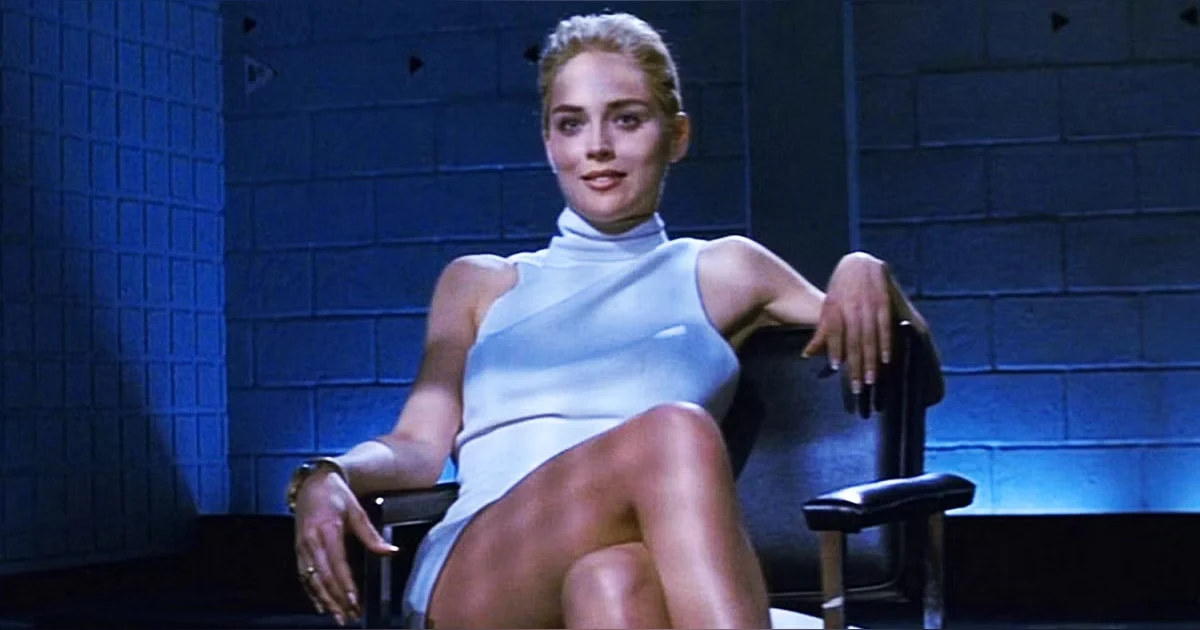
This week the dads tackle Paul Verhoeven's infamous erotic thriller — the fourth highest-grossing film of 1992 and quite possibly the most rewound VHS tape in rental shop history. Basic Instinct turns 33 this year, and it's still just as wild as you remember. In this episode: The legendary interrogation scene and the great Wayne Knight sweating debateWhether Sharon Stone knew — and whether Paul Verhoeven is telling the truthNick Curran: the "anti-Columbo" and arguably cinema's least heroic he...

 YouTube
 Apple Podcasts
 Spotify
 Amazon Music
 Overcast
 Castro
 iHeartRadio
 PocketCasts
 Castbox
 Podchaser
 TuneIn
 Deezer
 RSS Feed
 This week the dads tackle Paul Verhoeven's infamous erotic thriller — the fourth highest-grossing film of 1992 and quite possibly the most rewound VHS tape in rental shop history. Basic Instinct turns 33 this year, and it's still just as wild as you remember.
In this episode:
- The legendary interrogation scene and the great Wayne Knight sweating debate
- Whether Sharon Stone knew — and whether Paul Verhoeven is telling the truth
- Nick Curran: the "anti-Columbo" and arguably cinema's least heroic hero
- Why Michael Douglas was paid $14 million and Sharon Stone got half a million
- Verhoeven's Hitchcock obsession and the Vertigo parallels hiding in plain sight
- The ambiguous ending, the ice pick under the bed, and whether the sequel tells us anything
- LGBTQ+ representation and the bisexual villain problem
- The 2001 collector's edition DVD that came with a replica ice pick
- Sharon Stone's Barbie film pitch, and why it never happened
Verdict: Strong recommend. Ludicrous, overwrought, problematic in places — and still absolutely compelling.
Films mentioned: Basic Instinct (1992), Basic Instinct 2 (2006), Vertigo (1958)
Cast & crew discussed: Sharon Stone, Michael Douglas, Jeanne Tripplehorn, Wayne Knight, Paul Verhoeven, Jerry Goldsmith
We love to hear from our listeners! By which I mean we tolerate it. If it hasn't been completely destroyed yet you can usually find us on twitter @dads_film, on Facebook Bad Dads Film Review, on email at baddadsjsy@gmail.com or on our website baddadsfilm.com.
Until next time, we remain...
Bad Dads
Sidey: We are going to talk about the fourth highest grossing film of 1992.
Dan: Wow. And it is just, you know, a basic instinct.
Cris: Yeah.
Dan: For everyone really, isn't it?
Sidey: We've mentioned this film quite a few times on the pod, for various reasons. I don't think we've done an erotic thriller before, really.
Reegs: No. And I don't think we've done an erotic week either.
Sidey: We did a top five sex scenes or penises or something. We did something sexy. But we haven't done a full erotic week. So this is it.
Cris: We did see that Korean — well, Japanese — film. That was quite sexy, I thought.
Sidey: Yeah. But Basic Instinct — I don't think we need to worry about spoilers. Out of every film we've ever reviewed, this is probably one of the most watched by listeners.
Dan: I think so. Parts of it I'd seen about 50 times.
Reegs: 50. Chris, had you seen this before?
Cris: Yes, I have. And I actually have a funny story about this. When I first saw it, it was on VHS from the rental place. And the crossing-legs scene had been rewound so many times that it was fuzzy — you couldn't really see what was going on. Whoever rented it before had clearly revisited that particular moment quite enthusiastically. Repeatedly.
Sidey: So talking about that scene — with the advances in TV quality and whatever source it was streaming from, this was the most graphically I'd ever seen it. High definition, shall we say.
Reegs: Right. Okay. So the film opens with a sex scene. We're straight in.
Sidey: A mysterious blonde-haired woman on top of soon-to-be murder victim Johnny Boz.
Reegs: We first see him reflected in the ceiling mirrors. Very Paul Verhoeven. She's got long blonde hair that obscures her face, they're having sex, and crucially—
Sidey: She ties him up.
Reegs: With little Hermès scarves. And then at the moment of climax, she reaches for something—
Sidey: And furiously, brutally stabs him to death with an ice pick.
Reegs: Sharon Stone actually pierced actor Bill Cable's chest multiple times through the blood packs in that scene. He was required to go to hospital afterwards and was left with permanent scars.
Sidey: I hope she made it up to him.
Cris: It looked like she did.
Dan: Can you imagine? "Sharon Stone stabbed me in the chest." You'd dine out on that forever.
Sidey: And they could have very easily used a body double there, because you don't see her face. But it was actually her.
Reegs: It was her. Great commitment.
Sidey: Great commitment.
Reegs: Then we get to the crime scene investigation. It's Nick Curran — Michael Douglas — who is, I think it's fair to say, just the man of the early nineties.
Dan: Just pure, raw nineties macho sex appeal.
Reegs: In this he's a loose cannon, already notorious before he even appears on screen for his drinking, his cocaine use, and having shot two tourists in a controversial incident. He's like the anti-Columbo — he's always two steps behind everybody else. Where Columbo uses his bumbling old-man act to make people underestimate him, Nick compensates for his massive insecurities by being as aggressively masculine as possible at all times.
Dan: Being behind is where he likes to be.
Cris: Apparently.
Reegs: Nick is reinstated to active duty by Dr. Elizabeth Garner — Jeanne Tripplehorn — his police psychiatrist and former lover. And within about fifteen seconds of that appointment, he's making jokes about masturbation.
Sidey: Got calluses on his hands, yeah.
Reegs: Because they used to have sex, and now they don't.
Sidey: Temporary. As is his brief sobriety, which goes out the window fairly soon.
They do eventually go to one of Catherine Tramell's houses — Sharon Stone's character. And Roxy comes down the stairs, who they initially mistake for Catherine because she matches the description of a blonde woman.
Reegs: Roxy is Catherine's girlfriend — sort of. Catherine's deal is that she needs to be free to sleep with whoever she wants, and Roxy, who is very much in love with Catherine, accepts this. Sometimes she watches.
Sidey: Catherine is super wealthy — north of a hundred million. Her parents died in a boating accident, she's a bestselling crime novelist, and she inherited. So if she is the killer, it's not financially motivated.
Reegs: She's completely in control of every conversation she's in. All the men are shown to be bumbling and incompetent, and easily manipulated by her.
Sidey: She basically tells them to arrest her or get out.
Reegs: And she has this crazy history — her boxer boyfriend died in the ring, a college professor she knew was stabbed with an ice pick. Everything around her ends badly for someone.
Sidey: Soon after, she's brought in for questioning. She dresses in front of the mirror while Nick watches, not wearing underwear, and goes downtown.
Reegs: And we get the scene. The scene. She terrifies a room full of men using nothing but her personality. Wayne Knight — Newman from Seinfeld — is especially enjoyable.
Dan: He's sweating, bless him.
Reegs: They've never met before, but she knows everything about Nick. She's asking the questions. And when they eventually put her on the spot and ask if she killed him—
Sidey: She uncrosses her legs. And that's it. That's the scene. There's been a lot written about it subsequently, because she later claimed she was misled — that she wasn't told the camera would capture what it captured.
Reegs: Paul Verhoeven says that's not true. She knew.
Dan: It absolutely skyrocketed the film either way.
Reegs: And it's been parodied and written into cinema history. All the men in that room either look turned on or terrified. Catherine just stands up, gets a drink, and carries on.
Sidey: Now, here's where it gets complicated, because the film's protagonist — the supposed hero — goes to a bar, falls off the wagon, and rapes his psychiatrist.
Reegs: They have a prior relationship—
Sidey: Yes, it starts passionately and then he becomes increasingly aggressive. She categorically says no. And he just rapes her.
Reegs: And this is the character we're supposed to be following.
Sidey: He's already shot two tourists — heavily implied while on cocaine. He's now raped his psychiatrist. It's a bit problematic.
Reegs: The thing is, he thinks he's the hero of this story. Nobody else does.
Sidey: So we're two sex scenes in, a flashed vagina, and I really don't think we're even halfway through the film yet.
Cris: Almost halfway. Yeah.
Reegs: There is so much plot. Gus — Nick's partner, played by Wayne Knight — ends up shot. The Internal Affairs investigator is killed. Nick is put on leave but can't stay away. He follows Catherine through the city in a truly terrible car chase involving, memorably, stairs.
Sidey: I've never seen a car chase where a car goes up stairs before. It was genuinely erratic. But eventually he goes to the club—
Reegs: The amazing scene with him in the green turtleneck. Peak nineties dancing. Real commitment to throwing shapes.
Sidey: Catherine and Roxy are dancing together. As soon as Catherine sees him, she goes straight over and they bump and grind, and Roxy storms off. And then they go back to his and have sex — set up as a carbon copy of the opening murder scene. He's tied up. She leans back. Reaches for something—
Reegs: And doesn't. He survives. Later describes her as the, uh, "f*** of the century" to Roxy, who's been listening to the whole thing.
Sidey: God.
Reegs: The plot thickens when we discover Elizabeth Garner — Jeanne Tripplehorn — actually knew Catherine Tramell at university. They both did psychology degrees. And there's suggestion of obsession, stalking, a long history between them. The film treats having a psychology degree as though it makes you some kind of criminal mastermind, which I'm fairly sure is not how it works.
Sidey: Then Roxy dies in the car chase — she's driven off a bridge. It sends Catherine into grief, though she continues manipulating Nick throughout.
And all the while, Catherine has been writing a book about him. The protagonist is called "Shooter." The plot of the book is the plot of the film. As soon as she finishes it, she claims to be done with him.
Reegs: And then there's the building scene — Nick's partner has been stabbed in a lift. Nick sees Elizabeth Garner come around the corner. She reaches into her pocket. He shoots her dead. She was trying to return his keys — they've got a Bart Simpson keyring on them, because this cocaine-addicted, drinking, murdering, raping detective always makes sure he's home at 7pm to watch The Simpsons.
Sidey: The investigation concludes that it was Elizabeth Garner all along. Case neatly wrapped up.
Reegs: And then the ending. He goes back to the apartment. Catherine's waiting for him. They start to have sex. It's all romantic, then echoes the opening murder scene again. And then the camera pans down to the side of the bed—
Sidey: And there's an ice pick.
Reegs: There it is. She says something like "we'll live happily ever after" and the camera finds the ice pick. Rolling credits.
Sidey: There's still a level of ambiguity, I'd argue. But there's a Basic Instinct 2, so she has to be the killer. Otherwise what's the point?
Reegs: The score is Jerry Goldsmith — really overblown, full-on Hitchcockian. And the Verhoeven-Hitchcock connection is clear throughout. He was obsessed with Vertigo. Catherine's outfits are almost directly lifted from Kim Novak's wardrobe. It's Verhoeven doing Hitchcock but in his own very particular way.
Sidey: Sharon Stone was apparently fiftieth on the casting list. Michelle Pfeiffer, Kim Basinger, Geena Davis, Ellen Barkin, Mariel Hemingway were all considered. Stone was paid half a million. Michael Douglas got fourteen million.
Reegs: And she turned it into a launchpad for everything.
Sidey: Recently she claimed — with the Barbie film doing so well — that after Basic Instinct she had pitched a Barbie movie. A tough sell, given the content.
Dan: Quite a different Barbie.
Sidey: We should also note there were significant protests at the time around the representation of LGBTQ+ characters. Bisexual characters in nineties Hollywood are almost always the villain or positioned as monstrous. Roxy doesn't get a particularly dignified send-off.
Reegs: What is refreshing in retrospect is how assertive Catherine is about her own sexuality. But when you actually listen to what she's saying in that interrogation room, it's not that shocking at all. She's just a woman who likes sex.
Sidey: It didn't shock me one bit.
Reegs: Despite how ludicrous it is, it's really watchable.
Dan: Peak Sharon Stone.
Reegs: And Michael Douglas is a genuinely brilliant actor. He makes this absolute moron completely believable and entirely hateable.
Sidey: When I was young I was just there for — well, other things. Now I can actually appreciate what Douglas is doing. He's playing a character not entirely unlike how he apparently actually was in real life at the time.
Dan: Sex, coke, and shooting people. Loose cannon.
Sidey: Strong recommend from me. Still a great watch.
Reegs: Strong recommend. Excellent.